Friday, October 23, 2015

HIPAA Breach Notification Rule

HIPAA covered entities and their business associates to provide notification following a breach of unsecured protected health information.


The HIPAA Breach Notification Rule, 45 CFR §§ 164.400-414, requires HIPAA covered entities and their business associates to provide notification following a breach of unsecured protected health information. Similar breach notification provisions implemented and enforced by the Federal Trade Commission (FTC), apply to vendors of personal health records and their third party service providers, pursuant to section 13407 of the HITECH Act.


Breach Notification Requirements

Following a breach of unsecured protected health information, covered entities must provide notification of the breach to affected individuals, the Secretary, and, in certain circumstances, to the media. In addition, business associates must notify covered entities if a breach occurs at or by the business associate.

  • Individual Notice
Covered entities must notify affected individuals following the discovery of a breach of unsecured protected health information. Covered entities must provide this individual notice in written form by first-class mail, or alternatively, by e-mail if the affected individual has agreed to receive such notices electronically. If the covered entity has insufficient or out-of-date contact information for 10 or more individuals, the covered entity must provide substitute individual notice by either posting the notice on the home page of its web site for at least 90 days or by providing the notice in major print or broadcast media where the affected individuals likely reside. The covered entity must include a toll-free phone number that remains active for at least 90 days where individuals can learn if their information was involved in the breach. If the covered entity has insufficient or out-of-date contact information for fewer than 10 individuals, the covered entity may provide substitute notice by an alternative form of written notice, by telephone, or other means.  
These individual notifications must be provided without unreasonable delay and in no case later than 60 days following the discovery of a breach and must include, to the extent possible, a brief description of the breach, a description of the types of information that were involved in the breach, the steps affected individuals should take to protect themselves from potential harm, a brief description of what the covered entity is doing to investigate the breach, mitigate the harm, and prevent further breaches, as well as contact information for the covered entity (or business associate, as applicable).
With respect to a breach at or by a business associate, while the covered entity is ultimately responsible for ensuring individuals are notified, the covered entity may delegate the responsibility of providing individual notices to the business associate.  Covered entities and business associates should consider which entity is in the best position to provide notice to the individual, which may depend on various circumstances, such as the functions the business associate performs on behalf of the covered entity and which entity has the relationship with the individual.
  
  • Media Notice
Covered entities that experience a breach affecting more than 500 residents of a State or jurisdiction are, in addition to notifying the affected individuals, required to provide notice to prominent media outlets serving the State or jurisdiction.  Covered entities will likely provide this notification in the form of a press release to appropriate media outlets serving the affected area.  Like individual notice, this media notification must be provided without unreasonable delay and in no case later than 60 days following the discovery of a breach and must include the same information required for the individual notice.

  • Notice to the Secretary
In addition to notifying affected individuals and the media (where appropriate), covered entities must notify the Secretary of breaches of unsecured protected health information. Covered entities will notify the Secretary by visiting the HHS web site (http://www.hhs.gov/ocr/privacy/hipaa/administrative/breachnotificationrule/brinstruction.html) and filling out and electronically submitting a breach report form. If a breach affects 500 or more individuals, covered entities must notify the Secretary without unreasonable delay and in no case later than 60 days following a breach. If, however, a breach affects fewer than 500 individuals, the covered entity may notify the Secretary of such breaches on an annual basis. Reports of breaches affecting fewer than 500 individuals are due to the Secretary no later than 60 days after the end of the calendar year in which the breaches are discovered.

  • Notification by a Business Associate
If a breach of unsecured protected health information occurs at or by a business associate, the business associate must notify the covered entity following the discovery of the breach.  A business associate must provide notice to the covered entity without unreasonable delay and no later than 60 days from the discovery of the breach.  To the extent possible, the business associate should provide the covered entity with the identification of each individual affected by the breach as well as any other available information required to be provided by the covered entity in its notification to affected individuals.

When a breach occurs in your office, it is required that you report it!

This information was supplied by: http://www.hhs.gov/ocr/privacy/hipaa/administrative/breachnotificationrule/

For more information on this and other topics related to HIPAA, HR, OSHA, and Medicare, please emailsupport@hcsiinc.com or visit our website at http://www.hcsiinc.com

Be sure to become a member of our Linkedin group by visiting; http://bit.ly/1FWmtq6

To subscribe to this blog, enter your email address:

Delivered by FeedBurner

Thursday, October 22, 2015

3 Warning Signs Your Employees Are Burning Out

Today’s stress-driven lifestyle may spell out “success” to many, but it’s doing a lot of harm.

Employees everywhere are on the brink of burnout, and it’s damaging to their health and your business. Stressed out employees cost organizations $300 billion annually and drive 46 percent higher healthcare costs. What’s more, 64 percent of employees with high stress levels say they feel extremely fatigued and out of control, and it’s costing 35 percent of people at least an hour of productivity each day.
Without overhauling society, what can you do? The key is to recognize the telltale symptoms of burnout before it’s too late. But that’s often easier said than done, especially because on-going, low-grade stress can feel exhilarating (similar to working against a deadline), it is common for even employees to miss the signals.
Here are three warning signs to watch for:
1.      A slump in productivity or quality.
When top-notch employees start becoming unreliable, something’s up. Keep your eyes peeled for someone who’s regularly missing deadlines, racking up frequent complaints from patients, or whose performance has declined over the past couple of months.
2.      A detached, disengaged employee.
Notice an A-plus employee suddenly seems to disconnect or lose their spark? Intervene ASAP. These feelings could manifest in the form of poor communication with co-workers, an overall lack of enthusiasm, or an unwillingness to collaborate with the group.
3.      An unusually pessimistic person.
If a former department cheerleader’s attitude suddenly becomes negative, it is reason enough to raise the alarm. Be on the lookout for on-going negativity, endless complaints, and a previously high-performer who you can no longer encourage.
Now that you know burnout looks like early on, make it your goal to help employees stop the stress from progressing further.
Create a culture that discourages employees from burning the candle at both ends, and help managers and supervisors form caring team environments. When employees know they’re supported, they’ll feel more comfortable speaking up when they feel like they’re starting to fizzle.
Offering tools and resources that support all areas of well-being is just as critical as company culture. Programs like these communicate you care, while helping your people manage everything they’ve got going on and protecting your workforce against the damaging effects of burnout.

If this article was helpful, you may also want to read about the 7 signs your employee is about to quit: http://bit.ly/1MN7nWL


For more information on this and other topics related to HR, HIPAA, OSHA, and Medicare, please emailsupport@hcsiinc.com or visit our website at http://www.hcsiinc.com

Be sure to become a member of our Linkedin group by visiting; http://bit.ly/1FWmtq6
To subscribe to this blog, enter your email address:


Delivered by FeedBurner

Wednesday, October 21, 2015

Email Risk and HIPAA

Incident at Sutter Health Emphasizes Email Risks

Sutter Health’s revelation that a former employee inappropriately sent patient information to a personal email account in violation of the organization’s policy is yet another reminder of the privacy risks posed by email communication.
In a Sept. 11 statement, the California healthcare delivery system says the billing documents for 2,582 patients that were inappropriately emailed included names, dates of birth, insurance identification numbers, dates of services and billing codes. For one patient, compromised information also included a driver’s license number. For another, the a driver’s license number and Social Security number were included.

The organization says it discovered the email-related incident during a review of the former employee’s email activity and computer access. Sutter launched an investigation on Aug. 27 after the organization learned of possible “improper conduct” by the former employee, who worked at Sutter Physician Services, which handles billing for Sutter Health’s physician medical foundations.
Most of the patients whose data was involved in the April 26, 2013, incident reside in the greater Sacramento region and are patients of Sacramento-based Sutter Medical Foundation, Sutter Health says. The California healthcare provider says it has no evidence that any of the patient information was misused or disclosed to others. But it’s offering affected patients are being offered free credit monitoring services for one year.
“Sending any confidential information to a personal email account is strictly prohibited,” Sutter Health says in a statement. “Sutter Health now has sophisticated software that helps block confidential information from leaving the organization unless appropriate safeguards are in place to securely send the information. Employees are also required to annually acknowledge and sign Sutter Health’s confidentiality agreement, which states that the employees agree to abide by and protect Sutter Health’s confidential data.”
A Sutter Health spokeswoman says that the former employee emailed copies of the information without authorization before more technology safeguards were installed and that Sutter Health now uses encrypted email. “Sutter works hard at protecting patient information, including implementing new technologies to enhance protection. I cannot provide specific details of those technologies - that’s among our safety efforts,” she says.
Unfortunately, privacy breaches involving unsecured email, as well as text messages, are a common problem in the healthcare arena, security experts say.
“My experience is that doctors and medical practice employees send PHI through unsecure e-mail all the time,” says security and privacy expert Mike Semel, founder of Semel Consulting. “During our assessments, we often hear that doctors and nurses text each other all day with no concern that the information is PHI,” he says. “When we explain that PHI is any communication that includes a patient identifier and information about their treatment, diagnosis or payment for healthcare, and not just the information in the chart, we are often met with surprise.”
Besides implementing encrypted email communication, such as by using the “Direct Exchange” protocol, healthcare entities can take other steps to safeguard patient information. For example, they can use data loss prevention programs that scan emails and documents containing sensitive data, such as Social Security numbers, before they’re transmitted, security experts say. Depending on the technology, the sensitive data can either be blocked from transmission or automatically encrypted.
Organizations also need to be wary of employees who work around measures that have been put in place to prevent breaches involving email, Semel stresses.
“When doctors have privileges in multiple hospitals, it is easy to use free webmail for communications wherever they are,” he says. “Even if you have a secure e-mail server in your practice that allows for secure messaging within your organization, sending a message to someone else, like a specialist, [using webmail] is not secure.”
Employees and clinicians need to be educated on the secure methods for sending communication involving PHI, Semel says.
Independent HIPAA attorney Susan Miller says many breaches involving unsecured communication likely aren’t being reported to the Department of Health and Human Services’ Office for Civil Rights, which tracks healthcare data breaches.
“I think they are as under-reported as sending a fax the wrong way,” she says. Tips on the do’s and don’ts related to email encryption are “not part of any training that most staff get,” she says. “I have been talking to my clients about just use WinZip for some protection,” she notes, referring to the zip utility web application, which encrypts email.


For more information on this and other topics related to HIPAA, HR, OSHA, and Medicare, please emailsupport@hcsiinc.com or visit our website at http://www.hcsiinc.com

Be sure to become a member of our Linkedin group by visiting; http://bit.ly/1FWmtq6

To subscribe to this blog, enter your email address:

Delivered by FeedBurner

Tuesday, October 20, 2015

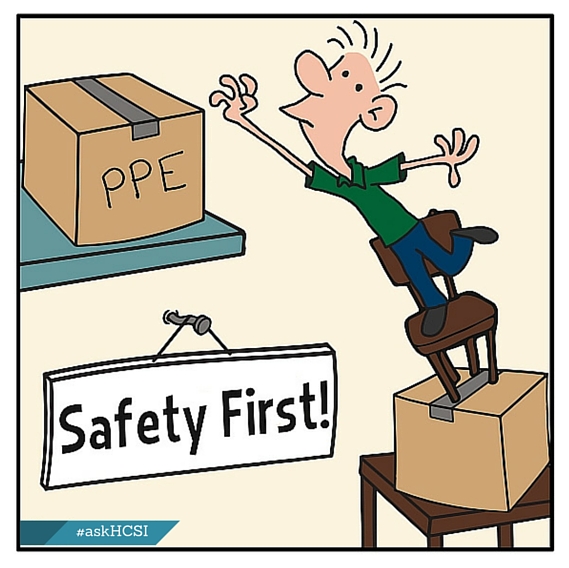
Safety First... It's and old slogan but make it a daily event.

Safety First!... 


I want to talk a little bit about a safety saying that we use in the industry all the time. As a matter of fact, I hear it everywhere. I hear it at workplaces, I hear it outside of workplaces, I hear it at seminars as well as conferences. I see signs everywhere that contain the saying. This saying has become so overused that I believe that it has lost any meaning. It has become a cliché. I even hear it used sarcastically at times.


The saying is...wait for it... safety first. Now you may think it’s weird that a safety professional is kind of dissing a safety slogan that has been around forever, but unless something has real meaning, it does nothing to enhance the safety or the welfare of our coworkers.

I have recently asked groups of employees during training sessions if they think safety first is a good idea. Knowing that I’m a safety guy, the response has been without a doubt: YES IT IS. The tricky part is when I ask them to explain what safety first means. Some in the classes looked at me like I was an alien. I saw some chin rubbing and head scratching. Eventually some brave soul would blurt out, “It means safety first," or "Don't ever do anything that could put you at risk of getting hurt."

So let’s step back and try to understand what that answer means. I think it means that safety first is really an undefined, feel-good saying that is parroted to employees so many times that they have no clear meaning of the definition, so they just parrot it back.

The Cambridge Dictionaries Online definition: Said to ​mean that it is ​best to ​avoid any ​unnecessary ​risks and to ​act so that you ​stay ​safe. Not bad, but when an actual dictionary definition begins with "Said to mean," I tend to be a bit skeptical that there is a proper and accepted definition. Take for example this same dictionary's definition of safety glasses: Special  ​pieces of ​strong ​glass or ​plastic in a ​frame that ​fits​tightly to a person's ​face to ​protect ​their ​eyes from ​dangerous ​chemicals or ​machines. Nope, not one "said to mean" in that definition!

Taken to its extreme, safety first could mean elimination of all risk. Safety above all else. Wouldn’t it be awesome if safety first could eliminate all risk! I would love it; I care about employees and their welfare; but as we all know, you cannot do anything without risk. Did you drive today? Driving is a huge risk. Better sell the car. Remember--safety first!

I’ve found that I have totally quit using the term safety first, because I believe it has completely lost its meaning. It’s been so overused it has become such a cliché or platitude, that I just choose not to use it anymore.

I do believe you can reduce and even eliminate the risk of injury and illness in the workplace, but it’s going to come from well-trained and well-informed employees, as well as supervisors and managers who are on board with auditing and enforcing safety policies and procedures. Not some tired old safety slogan hung on a big sign in the work area.

So if in a crazy world I were able to rewrite the definition for safety first at work so that I would start using it again, that definition would be something like this: As I approach my job for the day, say I was a machine operator, or an office worker, or any other of a million types of jobs there are in the world, I would first stop and make sure my work area is safe. Is my truck ready for the day? Is my machine guarding in place? Is my computer workstation set up correctly? Another set of questions would be: Am I aware of chemical and other hazards present? Do I have appropriate personal protective equipment and is it in good working order? Have I been trained, and are there procedures for safely doing my job?

Once this assessment was finished, I would have the ability to be a safe, productive, and quality-oriented employee.
Safety, productivity, and quality really are the three legs that support a company’s profits. It is my firm belief that you must keep focus on all three legs for the good of all.

So my vote is that safety first is something that I think we, as safety professionals, should stop using as freely as we do. I mean it seems like everywhere you look you see safety first, and you hear safety first everywhere. And as I said, unless something has meaning, what use is it?

If I ever chose to use safety first in the workplace again, I will define it clearly. If I were to use it, the definition I would use would go something like this:

Safety First: Before starting a job or task, survey it for anything that may cause you or others harm, and mitigate the risks following process and procedures as you were trained.

Did you notice there was no "said to mean" in my definition?
Written by Daniel Rebarcak - Published: 12 October 2015 - http://www.safetypeers.com/


For more information on this and other topics related to HR, HIPAA, OSHA, and Medicare, please email support@hcsiinc.com or visit our website at http://www.hcsiinc.com

Become a member of our LinkedIn group at: http://bit.ly/1FWmtq6

Top 10 Checklist When Firing an Employee

Employee terminations have an impact on everyone within the organization


The key to a “successful termination” begins with hiring and continues throughout the employer/employee relationship. Performance reviews also play a critical role in a “successful termination”, but the actual process of termination is what stays on everyone’s mind the longest time.

Here is a checklist to follow when firing an employee:


  • Decide exactly, and succinctly, why you want to fire the employee.
  • Compare your reasons for wanting to fire the employee with the job descriptions for that employee’s position. Does at least one of your reasons include that the employee is actually not doing the job properly?
  • If the employee is working pursuant to a contract, you must comply with the terms of the contract having to do with termination; otherwise you may be in breach of contract.
  • Inform the employee as to the reason behind their termination. This should be presented to them in writing (termination letter) at the time the firing occurs. The termination should occur in a private area. Be sure to have a witness with you during this time, but the witness should not be a co-worker or manager of the employee being fired.
  • After you tell the employee why they are being fired, allow them to tell you any defenses or other responses they have to your reasons for termination. It just may be that you are making a mistake or the employee may confirm your decision to fire them.
  • Make sure the employees’ files include a copy of the termination letter. In addition, add an additional note outlining what the employee said in their defense.
  • Be sure all wages, benefits, property, or other items belonging to the employee or to which the employee is entitled are given to the employee when they are notified of their firing.
  • At all stages of the termination process, treat the employee with common respect and courtesy.
  • Never do anything to humiliate the employee. Simply being fired is humiliation enough for an employee.
  • In general, the less said to co-workers and other employees the better. It is important to notify them of the firing, but you do not want to infringe on the terminated employee’s privacy.

Firing an employee is not a pleasant thing. However, being confident in your decision, following proper procedures, and keeping objective records of the decision and the event can put you in the best position possible in case the employee later makes accusations against you, or if they decide to pursue legal action.

For more information on this and other topics related to HR, HIPAA, OSHA, and Medicare, please emailsupport@hcsiinc.com or visit our website at http://www.hcsiinc.com

Be sure to become a member of our Linkedin group by visiting; http://bit.ly/1FWmtq6

To subscribe to this blog, enter your email address:

Delivered by FeedBurner

Monday, October 19, 2015

5 Common HIPAA Pitfalls

HIPAA Pitfalls at Physicians Practices


The following is a list of common HIPAA violations seen regularly in physician offices. Check your practice against this list to see if your staff commits the same common violations, and if so, address these problems in advance:


  • Not providing the Notice of Privacy Practices (NPP), even though they require patients to sign a statement indicating they had been provided with, and read, the NPP.
  • Not having documented internal information security and privacy policies for staff members to follow.
  • Exposing PHI to anyone within the office facilities e.g., patient file folders left out on the check-in desk unattended, patient file folders left in the wall pockets outside examination rooms with health information facing out and visible, etc.
  • Healthcare workers asking for verbal confirmation of PHI in the waiting room or in front of other patients.
  • Not obtaining consent from patients to photograph or film them and then use the photos, video, or audio of the patient for marketing purposes.
Avoiding HIPAA pitfalls is something that can be accomplished with an effective compliance program that covers both HIPAA Privacy and HIPAA Security. Be sure your compliance program is effective enough to protect your office.


For more information on this and other topics related to HIPAA, HR, OSHA, and Medicare, please emailsupport@hcsiinc.com or visit our website at http://www.hcsiinc.com
 

Be sure to become a member of our Linkedin group by visiting; http://bit.ly/1FWmtq6

To subscribe to this blog, enter your email address:

Delivered by FeedBurner

Friday, October 16, 2015

Access to Records for Investigation

When a investigation occurs, can they access our patients records?


Q: When is Adult Protective Services (APS) entitled to copies of a patient’s medical record without a signed authorization?

An adult patient was transferred from a hospital to our skilled nursing facility for long-term care. Prior to transfer, the hospital social worker called APS with a concern that family members were neglecting the patient and using the patient’s money for their own benefit. APS then came to our facility asking to review the patient’s medical record.

A: APS and Child Protective Services have authority under state law to obtain the information they need to investigate cases under their jurisdiction.


Because APS has an open investigation in this case, the caseworker has legal authority to review the patient’s medical record or obtain copies without authorization from the patient or the patient’s legal representative.


For more information on this and other topics related to HIPAA, HR, OSHA, and Medicare, please emailsupport@hcsiinc.com or visit our website at http://www.hcsiinc.com


Be sure to become a member of our Linkedin group by visiting; http://bit.ly/1FWmtq6

Thursday, October 15, 2015

Meaningful Use program for 2015-2017 and implementing Stage 3

CMS Unveils Final Meaningful Use Rule
The Centers for Medicare and Medicaid Services and the Office of the National Coordinator for Health Information Technology have issued the long-awaited final rules changing the requirements of the Meaningful Use program for 2015-2017 and implementing Stage 3 of the program.

The rules “shift the paradigm so health IT becomes a tool for care improvement, not an end in itself,” according to the October 6 announcement. The rule eases the reporting burdens, simplifies requirements, adds flexibility, supports interoperability and improves outcomes. It also transitions to a new and more responsive regulatory framework based on the Medicare Access and CHIP Reauthorization Act (MACRA), which essentially moves physicians out of the Meaningful Use program into a new Merit-based Incentive Payment System (MIPS).  
Some of the changes include:
●        Providers and state Medicaid agencies will now have until Jan. 1, 2018, to prepare for and comply with the next set of system improvements;
●        Stage 3 will now be optional in 2017;
●        Stage 3 will have eight objectives, with more than 60 percent requiring interoperability;
●        Public health reporting will have flexibility options;
●        APIs will be required;
●        Cybersecurity requirements have been strengthened; and
●        The reporting period for 2015 will be only 90 days for all providers, for new providers in 2016 and 2017 and for any provider moving to Stage 3 of the program in 2017
HHS had received more than 2,500 comments on the proposed rules.
Addressing concerns that the rule is coming out too late for providers to report in 2015, Patrick Conway M.D., acting principal deputy administrator and chief medical officer at CMS, pointed out that the deadlines could be extended and that providers can apply for hardship exemptions.
The rules also do not delay Stage 3, although many stakeholders have been asking that Stage 3 be “paused” and reevaluated. Conway indicated in a media call that a 60-day comment period will “get us to a similar place.” He also pointed out that HHS had to combine the alteration and Stage 3 rules; using a comment period is just a different mechanism to do so.
CMS will accept comments on the EHR Incentive Programs final rule for 60 days after it appears in the Federal Register, which is expected on October 16. The feedback will help shape future EHR rulemaking and will also be considered as CMS works to develop rulemaking around MACRA, which was passed by Congress earlier this year to replace the sustainable growth rate. Additional information about MACRA is expected in spring 2016.
A fact sheet on the new rule can be found here on the CMS website.

For more information on this and other topics related to HIPAA, OSHA, Medicare and HR, please emailsupport@hcsiinc.com or visit our website at http://www.hcsiinc.com
Become a member of our LinkedIn group at: http://bit.ly/1FWmtq6

More Effective HIPAA Enforcement Coming

OIG Says HIPAA Enforcement Needs Improvement

The HHS Office for Civil Rights should take 10 steps to strengthen its oversight of HIPAA Privacy Rule compliance as well as improve follow-up activities on reported data breaches, a government watchdog agency says in two new reports. Among the recommended steps are the launching of a long-overdue, permanent HIPAA compliance audit program, adding information about small breaches to OCR’s case-tracking system and expanding HIPAA education outreach efforts.

The Department of Health and Human Services’ Office of Inspector General issued the reports evaluating OCR, which is responsible for HIPAA enforcement. In each of the reports, OCR Should Strengthen Its Follow-up of Breaches of Patient Health Information Reported by Covered Entities and OCR Should Strengthen Its Oversight of Covered Entities’ Compliance With the HIPAA Privacy Standards, OIG made five recommendations. OCR agreed to carry out all of them.
In its report about OCR’s oversight of HIPAA Privacy Rule compliance by covered entities, OIG found that:
●        OCR investigated possible noncompliance with the privacy standards primarily in response to complaints;
●        OCR has not fully implemented the required audit program to proactively identify possible noncompliance from covered entities;
●        In about half of the closed privacy cases that OIG reviewed, OCR determined that covered entities were noncompliant with at least one privacy standard;
●        OCR documented corrective action for almost three-quarters of privacy cases in which it requested such actions from covered entities; however, 26 percent of cases had incomplete documentation;
●        71% percent of OCR staff at least sometimes checked whether covered entities had been previously investigated; however, 29 percent rarely or never did so;
●        OCR’s case-tracking system has limited search functionality; and
●        27% of Medicare Part B providers did not address all five selected privacy standards reviewed by OIG.
OIG’s five recommendations, which OCR says it is implementing, include:
1.      Fully implementing a permanent audit program;
2.      Maintaining complete documentation of corrective action;
3.      Developing an efficient method in OCR’s case-tracking system to search for and track covered entities;
4.      Developing a policy requiring OCR staff to check whether covered entities have been previously investigated; and
5.      Continuing to expand HIPAA outreach and education efforts to covered entities.
In its report evaluating OCR’s following up on breaches reported by covered entities, OIG acknowledged that OCR routinely investigates breaches affecting 500 or more individuals, as required under the HITECH Act. In almost all of the completed investigations, OCR has determined that covered entities were noncompliant with at least one HIPAA Privacy Rule standard.
Although OCR documented corrective action for most of the closed large breach cases in which it made determinations of noncompliance, 23 percent of cases had incomplete documentation of corrective actions taken by covered entities, OIG says.
OIG says OCR also did not record information about smaller breaches in its case tracking system, which limits OCR’s ability to track and identify covered entities with multiple small breaches.
Although 61 percent of OCR staff checked at least sometimes as to whether covered entities had reported prior large breaches, 39 percent of OCR staff rarely or never did so, OIG says. “If OCR staff wanted to check, they may face challenges because its case tracking system has limited search functionality and OCR does not have a standard way to enter covered entities’ names in the system,” OIG notes.
Based on these findings, OIG said OCR should:
1.      Enter small-breach information into its case-tracking system or a searchable database linked to it;
2.      Maintain complete documentation of corrective action;
3.      Develop an efficient method in its case-tracking system to search for and track covered entities that reported prior breaches;
4.      Develop a policy requiring OCR staff to check whether covered entities reported prior breaches;
5.      Continue to expand outreach and education efforts to covered entities.
In response to OIG’s call for implementing a permanent HIPAA compliance audit program, as required under the HITECH Act, OCR Director Jocelyn Samuel outlined steps the office is taking toward that long-delayed goal.
“We will launch our audit program in early 2016. This phase will test the efficacy of a combination of desk reviews of policies as well as on-site reviews. It will target common areas of non-compliance and will include HIPAA business associates,” Samuels wrote in a letter dated Sept. 23.
Samuels noted that key audit-preparation activities over the next several months include “OCR updating its HIPAA audit protocols; refining the pool of potential audit subjects; and implementing a screening tool to assess size, entity type and other information about potential audit subjects.”
One HIPAA expert says OIG’s assessment of OCR’s enforcement activities spotlight several important issues.
“The reports in their formal federal language are an attempt to light a bigger fire under OCR to use the authority in the HITECH Act for the proactive audits to reach the second plateau of operation,” says independent HIPAA attorney Susan Miller.
“While all five recommendations in each report are important, the small-breach information and a fully implemented permanent audit program are very important for HIPAA enforcement to reach the next higher level of operations,” she says. “Both reports taken together put both investigations and audits on the same enforcement level, making each as important as the other. It is also a recognition that a complaint and its related investigation may lead to a breach finding, and that both investigations and breaches produce corrective action plans.”

(OIG website, ISMG website)


For more information on this and other topics related to HIPAA, HR, OSHA, and Medicare, please emailsupport@hcsiinc.com or visit our website at http://www.hcsiinc.com


Be sure to become a member of our Linkedin group by visiting; http://bit.ly/1FWmtq6

Wednesday, October 14, 2015

HIPAA Related Record Retention

Many offices have asked this very question, so we are here to clarify this issue.

Q: How long must we retain the list of authorized and unauthorized disclosures pertaining to our nursing home residents? We assume that we must retain these lists while residents remain here, but how long must we retain this information after death or discharge?


A:  The HIPAA Privacy Rule generally requires covered entities to retain documentation for 6 years to demonstrate their compliance with the rule. You may dispose of documentation after that time.


Although each state regulates the record retention period for patient medical records, HIPAA related documentation must be retained for 6 years.


For more information on this and other topics related to HR, HIPAA, OSHA, and Medicare, please emailsupport@hcsiinc.com or visit our website at http://www.hcsiinc.com


Be sure to become a member of our Linkedin group by visiting; http://bit.ly/1FWmtq6

Tuesday, October 13, 2015

OSHA announces new system that gives greater weight to complex, time-consuming inspections

All OSHA inspections aren't equal...


OSHA logo
OSHA has moved to a new enforcement weighting system that assigns greater value to complex inspections that require more time and resources. The new system will allow for more strategic planning and measurement of inspections, and ensure that all workers are equally protected, regardless of the industry they work in. The system assigns "Enforcement Units" to each inspection. Routine inspections count as one unit, while those requiring greater resources — such as those involving musculoskeletal disorders,chemical exposures, workplace violence, and process safety management violations — count as up to nine units. The values are based on historical data and will be monitored and adjusted as necessary.
OSHA Assistant Secretary Dr. David Michaels announced the change at the National Safety Council conference in Atlanta earlier this week. "All inspections aren't equal — some are complex and require more time and resources — and many of those inspections have the greatest impact," he said. "This new system will help us better focus our resources on more meaningful inspections."
Inspections are one of the fundamental tools OSHA uses to encourage employers to abate hazards. Strong evidence from several recent studies shows these that injury rates decrease at an establishment in the years following an OSHA inspection.
Inspection Priorities
OSHA seeks to focus its inspection resources on the most hazardous workplaces in the following order of priority: 
1. Imminent danger situations—hazards that could cause death or serious physical harm receive top priority. Compliance officers will ask employers to correct these hazards immediately or remove endangered employees. 
2. Severe injuries and illnesses—employers must report:
   • All work-related fatalities within 8 hours.
   • All work-related inpatient hospitalizations, amputations, or losses of an eye within 24 hours.

3. Worker Complaints—allegations of hazards or violations also receive a high priority. Employees may request anonymity when they file complaints. 
4. Referrals of hazards from other federal, state or local agencies, individuals, organizations or the media receive consideration for inspection. 
5. Targeted inspections—inspections aimed at specific high-hazard industries or individual workplaces that have experienced high rates of injuries and illnesses also receive priority. 
6. Follow-up inspections—checks for abatement of violations cited during previous inspections are also conducted by the agency in certain circumstances.
Make certain that your staff, patient interactions and facility are up to OSHA standards for the safety of everyone involved. OSHA compliance training should not only be a yearly refresher training course but a daily activity in the awareness and practice of safety policies and procedures.

For more information on this and other topics related to HR, HIPAA, OSHA, and Medicare, please emailsupport@hcsiinc.com or visit our website at http://www.hcsiinc.com
Become a member of our LinkedIn group at: http://bit.ly/1FWmtq6