Showing posts with label Workplace Safety. Show all posts

Friday, August 21, 2020

HVAC Systems and COVID-19

 HVAC Systems and COVID-19

Do we need to protect employees from our building’s air conditioners?


Cause for concern?

In one study, available online as a preprint and has not undergone scientific review, researchers in Oregon collected samples from various places inside a hospital’s HVAC system and found genetic material from the virus that causes COVID-19. This demonstrates that it may be possible for the virus to be transmitted through HVAC systems.

The research started late; the final evidence is not in yet

However, researchers did not assess if the genetic material they found was able to cause infection, and they noted there were no confirmed COVID-19 cases associated with the samples found in the ventilation systems.

There is currently no conclusive evidence documenting the possibility of COVID-19 transmission through an air conditioning unit.

The known risk is non-circulation indoors

The known risk is that hot weather outside makes people seek air-conditioned comfort indoors. And indoors, there is less ventilation and more opportunity to spread disease. The risk to healthcare workers is that we are indoors and, on occasion, not socially distancing and rebreathing the air that people have just exhaled.

When we shut the doors and windows to keep the hot air outside, we are essentially eliminating the flow of fresh air, so everyone in the room is breathing and rebreathing the same air. If someone in the room is infected with COVID-19, then they are breathing out the virus, which can linger in airborne droplets and be inhaled by another person, potentially causing infection.

By comparison, if you were outside and near an infected person who breathed out some viral particles, there is a much larger volume of air flowing to disperse and dilute those particles quickly, reducing the risk of spread to another person nearby. That is why infectious disease experts consider outdoor gatherings and activities less risky than indoor ones (though not completely risk-free).

Another suspected risk of air conditioning

The other significant risk is that air conditioning units, fans, or even an open window can create strong enough air currents to move virus-containing droplets around a room. This happened in January at a restaurant in Guangzhou, China, where a person with COVID-19 infected five other people sitting at neighboring tables from 3 to 6 feet away, according to a study by scientists from the Chinese Center for Disease Control and Prevention. After examining video footage of the diners who were infected and simulating the transmission of the virus, scientists concluded that the small outbreak was caused by strong air currents from the air conditioning unit above the diners, which was blowing virus-containing aerosols from an infected person to those nearby. The restaurant also had no windows — and thus no ventilation bringing in fresh air and diluting virus particles in the air.

A clue: Flu particles can travel 30 feet in the air

The fact that aerosolized viral droplets can move in air currents in this way means that if you are in a room with an infected person and fresh air is not circulating, even if you are socially distancing to keep 6 feet apart at a minimum, you may not be safe.  Although there are currently no published studies that have examined precisely how far airborne COVID-19 particles can travel, previous research on influenza found that viral particles may travel upward of 30 feet in the air.

To be clear, this is only a concern in shared public places. At home, the risk of contracting COVID-19 through air currents or air conditioning units is no more likely than spreading the virus through close contact or touching contaminated surfaces.

CDC Engineering recommendations for protecting employees right now:

  • Modify or adjust seats, furniture, and workstations to maintain social distancing of 6 feet between employees, where possible.

o   Install transparent shields or other physical barriers where possible to separate employees and visitors where social distancing is not an option.

o   Arrange chairs in reception or other communal seating areas by turning, draping (covering the chair with tape or fabric so seats cannot be used), spacing, or removing chairs to maintain social distancing.

  • Use methods to physically separate employees in all areas of the building, including work areas and other areas such as meeting rooms, break rooms, parking lots, entrance and exit areas, and locker rooms.

o   Use signs, tape marks, or other visual cues such as decals or colored tape on the floor, placed 6 feet apart, to show where to stand when physical barriers are not possible.

o   Replace high-touch communal items, such as coffee pots and bulk snacks, with alternatives such as pre-packaged, single-serving items. Encourage staff to bring their own water to minimize the use and touching of water fountains or consider installing no-touch activation methods for water fountains.

o   Consider taking steps to improve ventilation in the building, in consultation with an HVAC professional, based on local environmental conditions (temperature/humidity) and ongoing community transmission in the area:

o   Increase the percentage of outdoor air (e.g., using economizer modes of HVAC operations) potentially as high as 100% (first, verify compatibility with HVAC system capabilities for both temperature and humidity control as well as compatibility with outdoor/indoor air quality considerations).

o   Increase total airflow supply to occupied spaces, if possible.

o   Disable demand-control ventilation (DCV) controls that reduce air supply based on temperature or occupancy.

o   Consider using natural ventilation (i.e., opening windows if possible and safe to do so) to increase outdoor air dilution of indoor air when environmental conditions and building requirements allow.

o   Improve central air filtration:

      •  Increase air filtration to as high as possible without significantly diminishing design airflow.
      •   Inspect filter housing and racks to ensure appropriate filter fit and check for ways to minimize filter bypass.

o   Consider running the HVAC system at maximum outside airflow for 2 hours before and after occupied times, in accordance with industry standards.

o   Generate clean-to-less-clean air movements by re-evaluating the positioning of supply and exhaust air diffusers and/or dampers and adjusting zone supply and exhaust flow rates to establish measurable pressure differentials. Have staff work in “clean” ventilation zones that do not include higher-risk areas such as visitor reception or exercise facilities (if open).

  • Consider using portable high-efficiency particulate air (HEPA) fan/filtration systems to help enhance air cleaning (especially in higher-risk areas).
  • Ensure exhaust fans in restroom facilities are functional and operating at full capacity when the building is occupied.
  • Consider using ultraviolet germicidal irradiation (UVGI) as a supplemental technique to inactivate potential airborne virus in the upper-room air of common occupied spaces, in accordance with industry guidelines.

CDC References and links for these recommendations are found here: https://www.cdc.gov/coronavirus/2019-ncov/community/office-buildings.html


To subscribe to this blog, enter your email address:


Delivered by FeedBurner

Thursday, August 13, 2020

Dangerous Hand Sanitizers


The FDA's list of dangerous hand sanitizers is now at 100+

On August 7, 2020, the FDA issued updated guidance to provide additional clarification on testing of alcohol used in hand sanitizers manufactured under FDA’s temporary policies to help ensure that harmful levels of methanol are not present in these products. This testing will help ensure widespread access to alcohol-based hand sanitizers that are free of contamination.

The FDA updated their guidance to provide clarification that companies must test each lot of the active ingredient (ethanol or isopropyl alcohol (IPA)) for methanol if the ethanol or IPA is obtained from another source. The FDA recommended using the test methods described in the USP monograph for alcohol (ethanol) and conducting the testing in a laboratory that has been previously inspected by the FDA and is compliant with current good manufacturing practices (CGMP).

Additionally, any alcohol (ethanol) or IPA found to contain more than 630 ppm methanol does not fall within the policies described in the temporary guidance and as a result, may be considered evidence of substitution or contamination, or both. Alcohol-based hand sanitizers that are contaminated with methanol are subject to adulteration charges under the FD&C Act. The alcohol (ethanol) or IPA should be destroyed following guidelines for hazardous waste, and the manufacturer or compounder should contact the FDA regarding the test results and the alcohol’s source.

Pharmacy list also updated

The temporary guidance has also been updated to provide adverse event reporting guidelines for state-licensed pharmacies and outsourcing facilities.

The agency also included an additional denaturant formula in the temporary guidance. Denaturing alcohol in hand sanitizers is critical to deterring children from unintentional ingestion. The FDA has said that consumer and health care professional safety is a top priority for FDA, and an important part of the FDA’s mission is to protect the public from harm, especially as they seek to help increase hand sanitizer supply.

For questions, email the FDA here:  COVID-19-Hand-Sanitizers@fda.hhs.gov 

The list of dangerous hand sanitizers

For the latest list of dangerous hand sanitizers as of August 10, 2020, and a list of products on their dangerous hand sanitizer list, go here (scroll down to see the list).

To subscribe to this blog, enter your email address:


Delivered by FeedBurner

Wednesday, March 21, 2018

Representatives Seek OSHA Standard on Healthcare Workplace Violence

Lawmakers Seek OSHA Standard on Workplace Violence Prevention in Healthcare

Rep. Ro Khanna (D-CA) and 12 other House Democrats have introduced legislation intended to curb workplace violence in health care facilities.
 Healthcare Compliance Solutions. Inc.
The Health Care Workplace Violence Prevention Act, introduced March 8, would mandate that the federal Occupational Safety and Health Administration (OSHA) develop a national standard on workplace violence prevention that would require health care facilities to develop and implement facility and unit-specific workplace violence prevention plans.

According to the Bureau of Labor Statistics’ Census of Fatal Occupational Injuries, at least 58 hospital workers died as a result of workplace violence between 2011 and 2016. In 2016, the Government Accountability Office found that health care workers were five to 12 times more likely to encounter nonfatal workplace violence than all other workers.
The legislation follows regulation enacted in 2014 in California, which went into effect in 2017, directing Cal/OSHA to craft a workplace violence prevention standard. The law requires all covered health care employers in California to develop and issue – by April 1 – plans to prevent workplace violence and ensure the safety of patients and workers.
The bill introduced by Khanna is similar: Workplaces would create and implement comprehensive violence prevention plans with input from doctors, nurses and custodial workers. The bill stresses prevention, training and worker participation. It defines workplace violence broadly to include not only physical acts of violence, but threats of violence. It emphasizes staffing as a crucial ingredient in preventing violence from occurring and responding quickly when it does.
“Health care workers, doctors and nurses are continuously at risk of workplace violence incidents – strangling, punching, kicking and other physical attacks – that can cause severe injury or death,” Khanna said in a March 8 press release. “This is simply unacceptable. The Health Care Workplace Violence Prevention Act puts a comprehensive plan in place and is a national solution to this widespread problem modeled after the success seen in California.”  

See the Cal/OSHA regulation for details of the standard and what might be expected in the adoption of a National OSHA regulation.
National Nurses United (NNU), the nation’s largest union of registered nurses, applauded the bill.
“Right now, health care facilities are not doing enough to prevent these violent incidents,” NNU Co-President Deborah Burger said in a press release. “Under the proposed federal standard, facilities would need to assess and correct for environmental risk factors, patient specific risk factors, staffing and security system sufficiency.”
“There are a number of interventions that can reduce violence in healthcare. For example, affixing furniture and lighting so they can’t be used as weapons, maintaining clear lines of sight between workers while they are caring for patients, and providing easy access to panic buttons or phones to call for help,” Burger explained. “It is imperative that nurses, doctors, and other health care workers, along with security staff and custodial personnel, are all involved in the development and implementation of these plans.”
 HCSI


To subscribe to this blog, enter your email address:


Delivered by FeedBurner

Tuesday, December 8, 2015

Protecting Employees from Workplace Violence

Being Aware and Having an Emergency Action Plan

The December 2nd, 2015 shooting in San Bernardino California, where 14 people were shot to death and 21 were injured at an office gathering, is a sobering reminder that violence in the workplace is an issue of concern for all of us. For employers, it is critical to ensure that all employees know the company's safety and violence prevention policies and procedures. In addition, companies can offer additional protections:

Hiring

  • Verify information on all new hires through reference checking.
  • Screen applicants by conducting background checks. Condition offers of employment upon the completion of background checks, drug tests or medical exams.
  • Review workers’ compensation records and illness claims to identify patterns of assault or other workplace violence. Understand industry trends and specific job exposures.

Employment

  • Have a clear, written policy protecting employees from harassment, threats and intimidation. Policies should note that any complaints of harassment or threats will be investigated fully and appropriate steps taken, including discipline and discharge.
  • Establish a complaint/grievance procedure.
  • Establish/communicate how to access employee assistance program (EAP) services.
  • Offer outplacement counseling to employees being laid off or terminated.

Security

  • Consider implementing the following security measures: monitoring systems, limited access key cards, employee identification cards, emergency warning systems, security guards, visitor sign-in policies, security escorts in case of emergencies.

Crisis Plan

Develop a crisis plan that outlines how to report incidents of workplace violence, instructions on who to notify and:

  • How to assess the situation, get help, warn other employees and secure the workplace.
  • When and how to involve the police and gather information to assist an investigation.
  • Follow-up activities like debriefing employees, resuming operations and long-term planning.
All employers should and probably do maintain an evacuation plan, but few employees even drill about the plan.  Moreover, responding to a tornado, hurricane or other natural disaster is far different from responding to a fire, explosion, shooting, or collapse of the electrical grid. 
  •          Have you as an employer even thought about how you should respond to such events and protect your employees? 
  •          Do you maintain an Emergency Ection Plan (EAP) under OSHA regulations? 
  •          Do you even know what triggers the obligation to have an EAP?
There is much talk about workplace violence, but have you assessed your operation to determine where risks are presented?  Do you have employees making deliveries or going to customers’ homes unaccompanied? Have you professionally assessed security for entrance and exits?  Do management and HR know when they should be concerned about potentially dangerous employee behavior and what to do next?

If your answer is to simply point to the binder on a shelf or to be self assured that you have “competent people to take care of such matters,” then perhaps it is time to roll up your sleeves and check.
OSHA Focus on Workplace Violence

If you want additional motivation, OSHA is dead serious about inspecting employers for workplace violence exposures and issuing citations under its general duty powers. 

Special Focus on Workplace Violence in Healthcare

OSHA is also quite serious about conducting health care and hospital inspections which focus on workplace violence and ergonomic concerns.
See Also
Image credit: Chris Kuhlman 

For more information on this and other healthcare compliance topics related to HIPAA, OSHA, Medicare and HR, simply email your questions to support@hcsiinc.com
visit our website at http://www.hcsiinc.com or post a question on our LinkedIn group at: http://bit.ly/1FWmtq6

To subscribe to this blog, enter your email address:


Delivered by FeedBurner

Tuesday, October 20, 2015

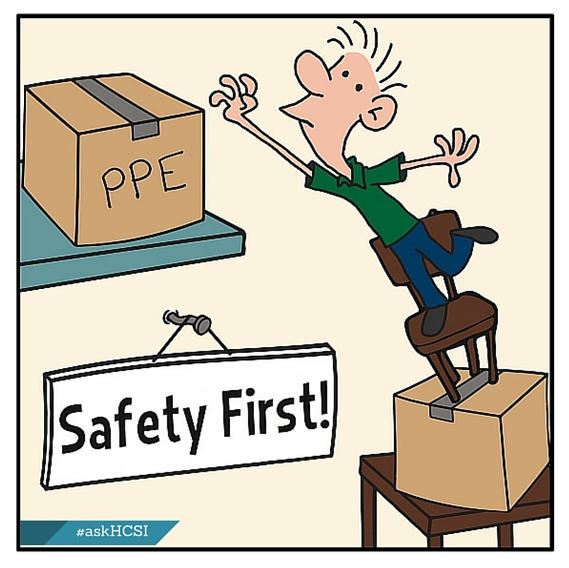
Safety First... It's and old slogan but make it a daily event.

Safety First!... 


I want to talk a little bit about a safety saying that we use in the industry all the time. As a matter of fact, I hear it everywhere. I hear it at workplaces, I hear it outside of workplaces, I hear it at seminars as well as conferences. I see signs everywhere that contain the saying. This saying has become so overused that I believe that it has lost any meaning. It has become a cliché. I even hear it used sarcastically at times.


The saying is...wait for it... safety first. Now you may think it’s weird that a safety professional is kind of dissing a safety slogan that has been around forever, but unless something has real meaning, it does nothing to enhance the safety or the welfare of our coworkers.

I have recently asked groups of employees during training sessions if they think safety first is a good idea. Knowing that I’m a safety guy, the response has been without a doubt: YES IT IS. The tricky part is when I ask them to explain what safety first means. Some in the classes looked at me like I was an alien. I saw some chin rubbing and head scratching. Eventually some brave soul would blurt out, “It means safety first," or "Don't ever do anything that could put you at risk of getting hurt."

So let’s step back and try to understand what that answer means. I think it means that safety first is really an undefined, feel-good saying that is parroted to employees so many times that they have no clear meaning of the definition, so they just parrot it back.

The Cambridge Dictionaries Online definition: Said to ​mean that it is ​best to ​avoid any ​unnecessary ​risks and to ​act so that you ​stay ​safe. Not bad, but when an actual dictionary definition begins with "Said to mean," I tend to be a bit skeptical that there is a proper and accepted definition. Take for example this same dictionary's definition of safety glasses: Special  ​pieces of ​strong ​glass or ​plastic in a ​frame that ​fits​tightly to a person's ​face to ​protect ​their ​eyes from ​dangerous ​chemicals or ​machines. Nope, not one "said to mean" in that definition!

Taken to its extreme, safety first could mean elimination of all risk. Safety above all else. Wouldn’t it be awesome if safety first could eliminate all risk! I would love it; I care about employees and their welfare; but as we all know, you cannot do anything without risk. Did you drive today? Driving is a huge risk. Better sell the car. Remember--safety first!

I’ve found that I have totally quit using the term safety first, because I believe it has completely lost its meaning. It’s been so overused it has become such a cliché or platitude, that I just choose not to use it anymore.

I do believe you can reduce and even eliminate the risk of injury and illness in the workplace, but it’s going to come from well-trained and well-informed employees, as well as supervisors and managers who are on board with auditing and enforcing safety policies and procedures. Not some tired old safety slogan hung on a big sign in the work area.

So if in a crazy world I were able to rewrite the definition for safety first at work so that I would start using it again, that definition would be something like this: As I approach my job for the day, say I was a machine operator, or an office worker, or any other of a million types of jobs there are in the world, I would first stop and make sure my work area is safe. Is my truck ready for the day? Is my machine guarding in place? Is my computer workstation set up correctly? Another set of questions would be: Am I aware of chemical and other hazards present? Do I have appropriate personal protective equipment and is it in good working order? Have I been trained, and are there procedures for safely doing my job?

Once this assessment was finished, I would have the ability to be a safe, productive, and quality-oriented employee.
Safety, productivity, and quality really are the three legs that support a company’s profits. It is my firm belief that you must keep focus on all three legs for the good of all.

So my vote is that safety first is something that I think we, as safety professionals, should stop using as freely as we do. I mean it seems like everywhere you look you see safety first, and you hear safety first everywhere. And as I said, unless something has meaning, what use is it?

If I ever chose to use safety first in the workplace again, I will define it clearly. If I were to use it, the definition I would use would go something like this:

Safety First: Before starting a job or task, survey it for anything that may cause you or others harm, and mitigate the risks following process and procedures as you were trained.

Did you notice there was no "said to mean" in my definition?
Written by Daniel Rebarcak - Published: 12 October 2015 - http://www.safetypeers.com/


For more information on this and other topics related to HR, HIPAA, OSHA, and Medicare, please email support@hcsiinc.com or visit our website at http://www.hcsiinc.com

Become a member of our LinkedIn group at: http://bit.ly/1FWmtq6